

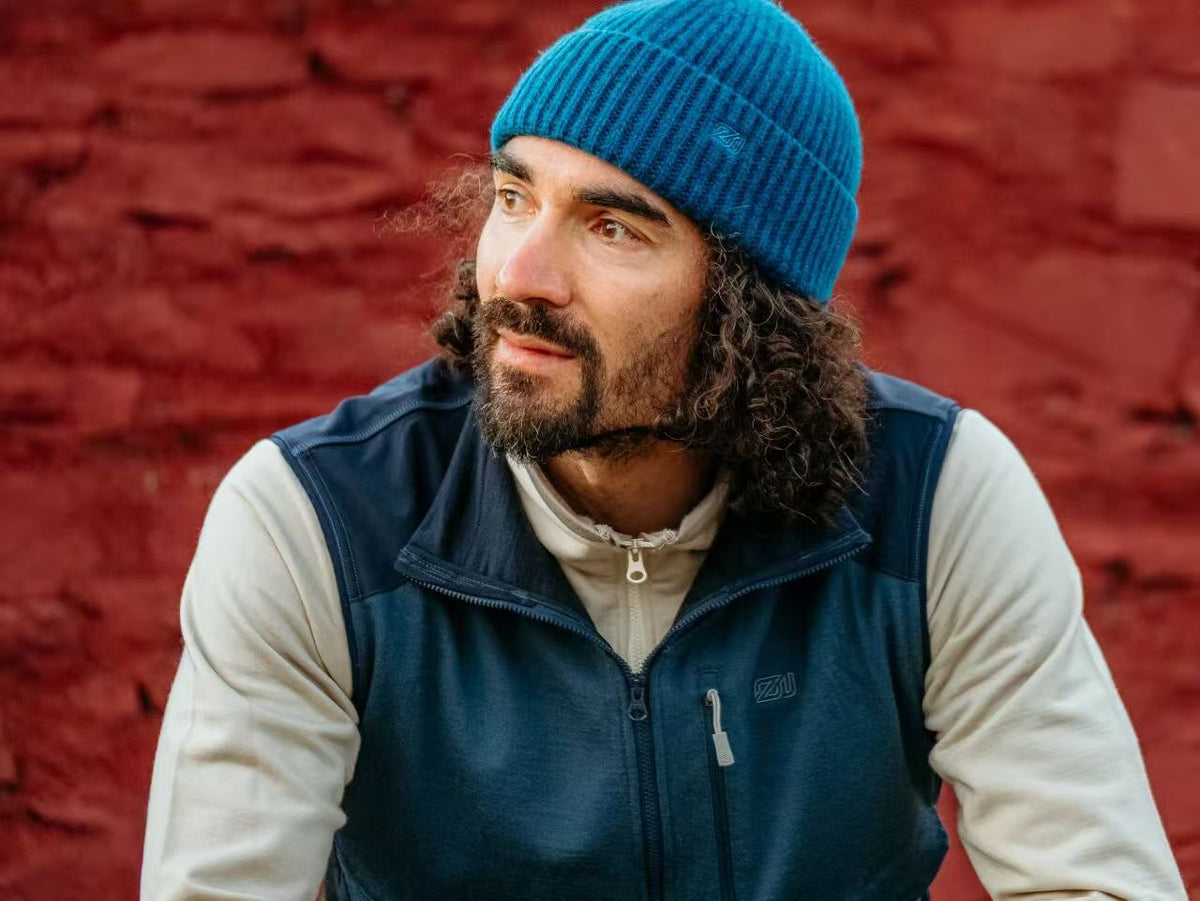
Wool is not a miracle fiber. It pills. It is not the most abrasion-proof cloth we sell. Moths go after it because it is protein. When it holds more than about 35% of its dry weight in moisture, it can feel wet and cold. People have told us a thick Thule Pro sock still felt that way. Change into a dry pair. Feet usually come back.
In a dry, well-heated northern winter, wool's appetite for moisture can leave skin tight, with static. Moisturizer helps. Our gear also runs a little heavy. Ultralight racing is not the job.
What it still does: next-to-skin comfort, temperature and humidity that stay in a usable range, and a long day that does not turn the garment sour. After light sweat it can dry and stay warm. A lot of synthetic cloth cannot copy that mix.
We blend for the job. Nylon where the cloth has to take a beating. Tencel or silk in summer tees. A little elastane so underwear holds. If you are trying wool for the first time, look for more than 50% wool. We still prefer a real wool next-to-skin layer. This year's 150 g long-sleeve and short-sleeve tees are the ones we wear for travel and commuting. Store them dry. Use moth protection.
Choose wool only if you can live with the faults. It will not fix every outdoor problem. We still reach for it, because the feel, the function, and the fact that it can break down in the world are still the reasons we work with it.
Wear Nature, Go Further.
ZEALWOOD